It is an iron law of history that those who will be caught up in the great movements determining the course of their own times always fail to recognise them in their early stages.
Stefan Zweig, The World of Yesterday, 1942.
Endgame Assembly focuses on the moment when a world ends and what comes next remains entirely unknown.
The future is blocked. Contemporary culture fails in developing alternative visions of what lies ahead. One response to this blockage is the temptation of apocalyptic thinking — the romantic imagining of our world ending in spectacular ways, the promise of great ruptures. It is everywhere in contemporary discourse. It seeps into right-wing US politics, where figures like Curtis Yarvin and Peter Thiel produce apocalyptic visions influencing the highest levels of power. But its whispers are as well present in the language of climate change and mass extinction, where catastrophes are imagined, calculated, and foretold. For at least two decades, these visions have saturated academic debates, artistic practices, and popular culture.
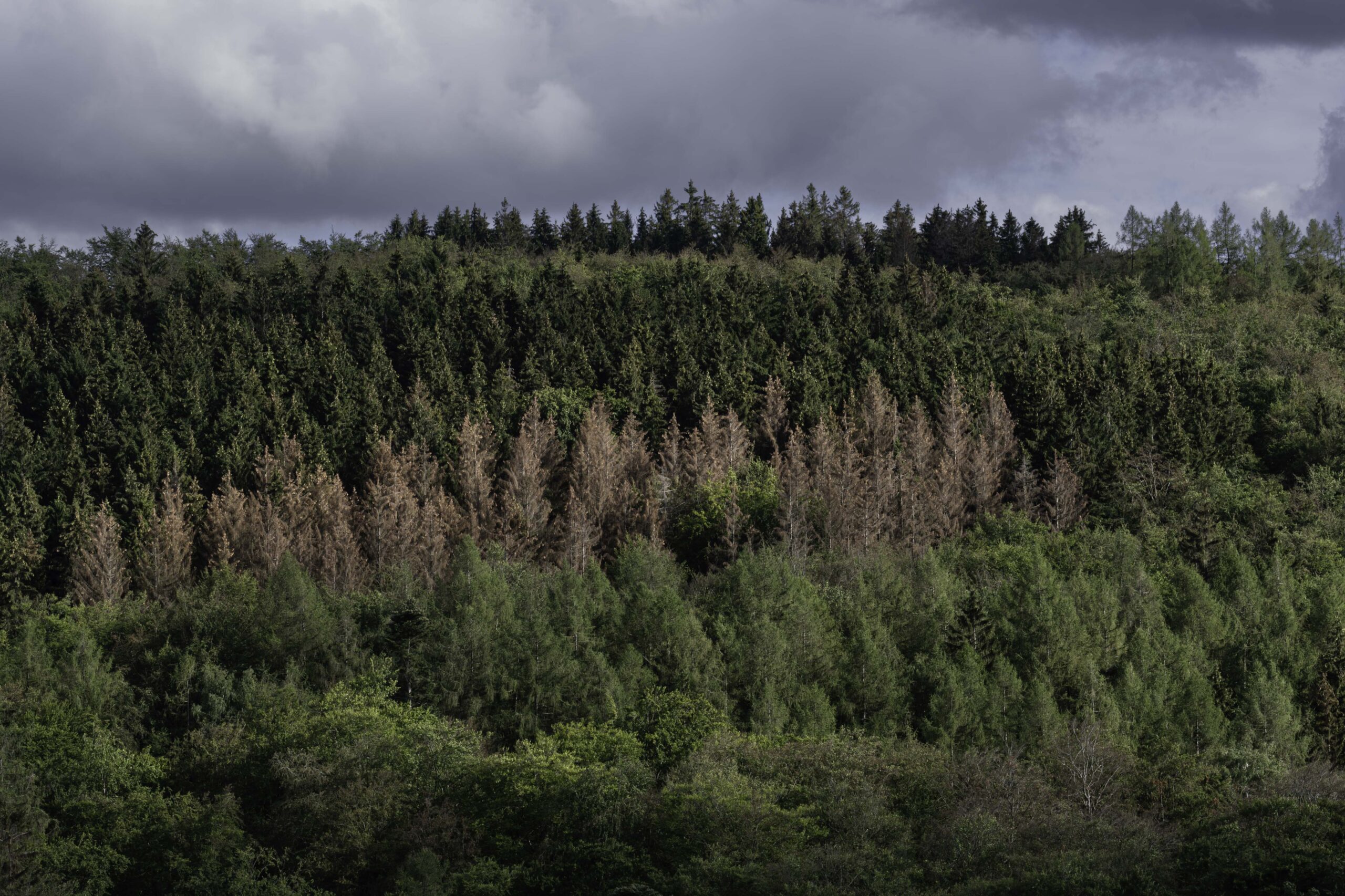
Perhaps a more truthful approach is to sit with the imperceptible, with those shifts that reshape the world before we have found words for them. This asks us to reckon with processes that carried no announcement, no spectacle, no shared moment of recognition. Endgame Assembly dwells in moments when we still believe in the continuity of the world, while the ground beneath us has already cracked.
Upon arrival, the spectators are invited to move freely between two distinct but communicating spaces.
The first space hosts a solo performer, Sonia Si Ahmed, whose voice is fragile and fragmented. She moves through the space, telling first-person accounts of worlds drifting and shifting: a volcanic eruption, melting ice caps, a pandemic and its aftermath, an afternoon shopping in October. These accounts are interwoven with literary and scientific references, creating a poetic constellation of stories that all resist completion. This material, developed collaboratively with Sonia, is both personal and elusive, situating the audience within a realm of half-remembered catastrophes and fragile testimonies. Everything Sonia tells is imminent, at the verge of happening.
The second space, created and designed in collaboration with the artist Maria Jerez, functions as an immersive environment — a landscape of fabrics that move like a thousand skins slowly shedding. This landscape is alive and drifting, responding directly to the words spoken by Sonia in the first space. Here, visitors soon understand that what is asked of them is silence. The suspension of Sonia’s words in one space is physically mirrored in the second, creating a sensitive correspondence between the two spaces.
- concept & direction
- david weber-krebs
- performance
- sonia si ahmed, paula almiron, david weber-krebs
- spatial design
- maria jerez
- dramaturgy
- jonas rutgeerts
- thanks to
- petar sarjanović, jan fedinger, marko gutić mižimakov, famke dhont
- residencies
- kunstenwerkplaats, monty kunstencentrum, kaap kunstencentrum.
- production
- outline
- co-production
- c-takt, buda kunstencentrum
- with the support of
- flanders, state of the arts
- duration
- approx. 3 hours
- language
- english